30 August 2008

My Old Thesis Presentation

I found the my thesis presentation (in french, 2000) in the old iBook I left in my cellar.


It is really outdated now :-) ....

I wonder how I would write this presentation now... this makes me think about this presentation pointed out by Berci Mesko on twitter: I would make this presentation obligatory for all the speakers of the world.
Death by PowerPoint
View SlideShare presentation or Upload your own. (tags: powerpoint ppt)


Pierre

Mesh Fequencies & Pubmed Articles

In a recent post on his blog, David Rothman was asked for a 3rd Party PubMed/MEDLINE Tool: What I’d like to do is to be able to enter the PMIDs of several citations and have the tool search MEDLINE via PubMed for the assigned MeSH terms, and return a single list of the terms used by any of the entered citations with a measurement of frequency. For example, if I input PMIDs 16234728, 15674923, and 17443536, the tool would return results telling me that 100% or 3 of 3 use the term “Catheters, Indwelling”, 2 of 3 use “Time Factors,” 1 of the 3 uses “Urination Disorders,” and so on. Although this example uses 3 PMIDs, I’d like to be able to input at least 10, just based on personal experience.

It took less than half an hour to write this tool using java. The source code is available here and an executable jar file is available here.

The input is a standard pubmed query :

java -jar pubmedfrequencies.jar -term "Lindenbaum P[Author]" -n 20 > ~/page.html
or a list of pmid
java -jar pubmedfrequencies.jar -pmid 8985320,16027742,15047801,18053270,9682060 > ~/page.html


The output is a simple html table:


Mesh89853201602774215047801180532709682060
HumansXXX
AnimalsXX
Autistic DisorderXX
(...)
RNA-Binding ProteinsXX
RotavirusXX
SoftwareX
Two-Hybrid System TechniquesX
Zinc FingersX


well... that was not Big Science....

Note: Rajarshi Guha also suggested another solution: http://www.chembiogrid.org/cheminfo/rest/mesh/16234728,15674923,17443536

Pierre


Addendum:After the first comments, I've added a gui support and a count of the mesh terms in the result.

25 July 2008

Feeling like a newbie: Parsing NCBI-TinySeq with RUBY

I've been recently interested in the new popular language Ruby and its web framework Rails for two reasons:
First,this picture:


Second, Matt Wood's blog about bioinformatics and ruby.

So here is my very first experience with ruby. The book I used was

Very good for learning but a little bit outdated. And I shoudl have started with a book about ruby only.

I've downloaded rails as described here. I got two problems:
  • a ssl library was not installed. I fixed the problem thank to this post
  • a problem with the zlib library, fixed by installing the ruby-zlib


My 'hello world' was "download a sequence from ncbi in TinySeq/XML format, parse the XML and create a new instance of 'a sequence' class". I've been suprised to find that ruby doesn't contain a decent API for parsing XML with DOM or SAX. The default API is called REXML and I found it ugly (or I may be too new to ruby to understand why it may be good). On friendfeed Adam Kraut suggested me to consider libxml-ruby (http://libxml.rubyforge.org/) or Hpricot (an xhtml parser). However I gave REXML a try by using its event-based API (but it is *not* a SAX API (namespaces are not supported) ).

OK, here is how I coded this (it took me hours to find the correct statements :-) ).
First we define a class handling an Organism which is just an id and a name (taxId and taxName)
class Organism
#constructor
def initialize(id,name)
@id=id
@name=name
end
end


We also tell ruby to generate the getters to access those two properties
attr_accessor :id, :name


Next, we define a TinySeq class:
class TinySeq
#class members
@seqtype=nil
@gi=nil
@accver=nil
@sid=nil
@local=nil
@organism=nil
@defline=nil
@length=nil
end


In this TinySeq class I defined a nested class Handler: a XML stream handler using the REXML::StreamListener API. This looks like a SAX Handler but it doesn't handle the namespaces.
A TinySeq XML looks like this
<?xml version="1.0"?>
<!DOCTYPE TSeqSet PUBLIC "-//NCBI//NCBI TSeq/EN" "http://www.ncbi.nlm.nih.gov/dtd/NCBI_TSeq.dtd">
<TSeqSet>
<TSeq>
<TSeq_seqtype value="nucleotide"/>
<TSeq_gi>5</TSeq_gi>
<TSeq_accver>X60065.1</TSeq_accver>
<TSeq_taxid>9913</TSeq_taxid>
<TSeq_orgname>Bos taurus</TSeq_orgname>
<TSeq_defline>B.bovis beta-2-gpI mRNA for beta-2-glycoprotein I</TSeq_defline>
<TSeq_length>1136</TSeq_length>
<TSeq_sequence>CCAGCGCTCGTCT.....CAAGAAAAAAA</TSeq_sequence>
</TSeq>
</TSeqSet>


here is the code I used to handle the XML events:
class Handler
include REXML::StreamListener
....

the class is initialized with an empty TinySeq instance
def initialize(tinyseq)
@tinyseq = tinyseq
#current tag
@tag = nil
#current text
@textcontent = nil
#did we see an error ?
@error=false
@taxid=nil
@taxname=nil
end

I wish I could have just declared some getters for the class TinySeq but this nested class TinySeq::Handler needed to set the properties of this tinyseq. It seems not to work like java where the nested classes have an access to the private properties of the parent class) that is why I asked ruby to create both setters and getters in TinySeq.
attr_accessor :seqtype, :gi, :accver, :sid, :local, :organism, :defline, :length


Next we define what the handler should do when it opens a tag
def tag_start(name, attrs)
@tag=nil
if !( name=="TSeq_sequence" || name=="TSeqSet" || name=="TSeq" || name=="TSeq_seqtype"|| name=="Error" )
@tag=name
@textcontent=""
elsif name=="TSeq_seqtype"
@tinyseq.seqtype = attrs["value"]
elsif name=="Error"
@error=true
end
end

... when it finds a text within a tag
def text(text)
unless @tag.nil?
@textcontent+=text
end
end

... when it closes a tag (it fills the properties of the tinyseq)
def tag_end(name)
unless @tag.nil?
case @tag
when "TSeq_gi"
@tinyseq.gi = @textcontent
when "TSeq_accver"
@tinyseq.accver = @textcontent
when "TSeq_sid"
@tinyseq.sid = @textcontent
when "TSeq_local"
@tinyseq.local = @textcontent
when "TSeq_defline"
@tinyseq.defline = @textcontent
when "TSeq_taxid"
@taxid = @textcontent
when "TSeq_orgname"
@orgname = @textcontent
when "TSeq_length"
@tinyseq.length = @textcontent
else
$stderr.puts "Error #{name} #{@tag}\n"
end
end

if name=="TSeq" && !error
@tinyseq.organism= Organism.new(@taxid,@orgname)
end
@tag=nil
@textcontent=""
end


Then we create a static... sorry... a "class method" fetch for TinySeq returning a TinySeq object from a ncbi gi identifier.
def TinySeq.fetch(gi)
#build the efetch uri
#the API works whatever db is protein or nucleotide
url = "http://www.ncbi.nlm.nih.gov/entrez/eutils/efetch.fcgi?db=protein&id="+ CGI::escape(gi.to_s)+"&rettype=fasta&retmode=xml";
#create a new Streaming handler
handler= TinySeq::Handler.new TinySeq.new
#parse the document
REXML::Document.parse_stream(Net::HTTP.get_response(URI.parse(url)).body, handler)
if handler.error
return nil
end
return handler.tinyseq
end


Finally, here is a good old 'main argc/argv' reading a list of gi on the command line, fetching a TinySeq object, putting this instance in an array and printing the content of the array.
seqarray=[]
ARGV.each{|gi|
seq=TinySeq.fetch(gi)
if seq.nil?
$stderr.print "#{gi} is a bad gi\n"
else
seqarray << seq
end
}
seqarray.each{|seq| print seq.to_s+"\n"}


... testing....
pierre@linux:~> ruby tinyseq.rb 5 6 7
(5|X60065.1) "B.bovis beta-2-gpI mRNA for beta-2-glycoprotein I" size:1136 (9913) Bos taurus
(6|CAA42669.1) "beta-2-glycoprotein I [Bos taurus]" size:342 (9913) Bos taurus
(7|X51700.1) "Bos taurus mRNA for bone Gla protein" size:437 (9913) Bos taurus


That's it. I would be curious to know about a simpler and more elegant solution.

Pierre


The complete source code:


require "cgi"
require 'net/http'
require 'rexml/document'
require 'rexml/streamlistener'

#an organism: a taxon ncbi id and a name
class Organism
#generate the getters; getId() and getName()
attr_accessor :id, :name
#constructor
def initialize(id,name)
@id=id
@name=name
end

#toString method
def to_s
return "("+@id+") "+@name
end
end

#a ncbi TinySeq
class TinySeq

#class members
@seqtype=nil
@gi=nil
@accver=nil
@sid=nil
@local=nil
@organism=nil
@defline=nil
@length=nil

#generate the getters and the setters
#How can I just use attr_reader instead attr_accessor of and the nested class TinySeq::Handler have an access to those properties ?
attr_accessor :seqtype, :gi, :accver, :sid, :local, :organism, :defline, :length

#toString function
def to_s
return "(#{@gi}|#{@accver}) \"#{@defline}\" size:#{@length} #{@organism}"
end

#internal class
class Handler
include REXML::StreamListener
attr_reader :error, :tinyseq

#initialize with a tinyseq
def initialize(tinyseq)
@tinyseq = tinyseq
#current tag
@tag = nil
#current text
@textcontent = nil
#did we see an error
@error=false
@taxid=nil
@taxname=nil
end

def tag_start(name, attrs)
@tag=nil
if !( name=="TSeq_sequence" || name=="TSeqSet" || name=="TSeq" || name=="TSeq_seqtype"|| name=="Error" )
@tag=name
@textcontent=""
elsif name=="TSeq_seqtype"
@tinyseq.seqtype = attrs["value"]
elsif name=="Error"
@error=true
end
end

def tag_end(name)
unless @tag.nil?
case @tag
when "TSeq_gi"
@tinyseq.gi = @textcontent
when "TSeq_accver"
@tinyseq.accver = @textcontent
when "TSeq_sid"
@tinyseq.sid = @textcontent
when "TSeq_local"
@tinyseq.local = @textcontent
when "TSeq_defline"
@tinyseq.defline = @textcontent
when "TSeq_taxid"
@taxid = @textcontent
when "TSeq_orgname"
@orgname = @textcontent
when "TSeq_length"
@tinyseq.length = @textcontent
else
$stderr.puts "Error #{name} #{@tag}\n"
end
end

if name=="TSeq" && !error
@tinyseq.organism= Organism.new(@taxid,@orgname)
end
@tag=nil
@textcontent=""

end

def text(text)
unless @tag.nil?
@textcontent+=text
end
end

end


#class method (eq java static)
def TinySeq.fetch(gi)


#build the efetch uri
#the API works whatever db is protein or nucleotide
url = "http://www.ncbi.nlm.nih.gov/entrez/eutils/efetch.fcgi?db=protein&id="+ CGI::escape(gi.to_s)+"&rettype=fasta&retmode=xml";
#create a new Streaming handler
handler= TinySeq::Handler.new TinySeq.new
#parse the document
REXML::Document.parse_stream(Net::HTTP.get_response(URI.parse(url)).body, handler)
if handler.error
return nil
end
return handler.tinyseq
end
end

seqarray=[]
ARGV.each{|gi|
seq=TinySeq.fetch(gi)
if seq.nil?
$stderr.print "#{gi} is a bad gi\n"
else
seqarray << seq
end
}
seqarray.each{|seq| print seq.to_s+"\n"}

21 July 2008

SciFOAF 2.0

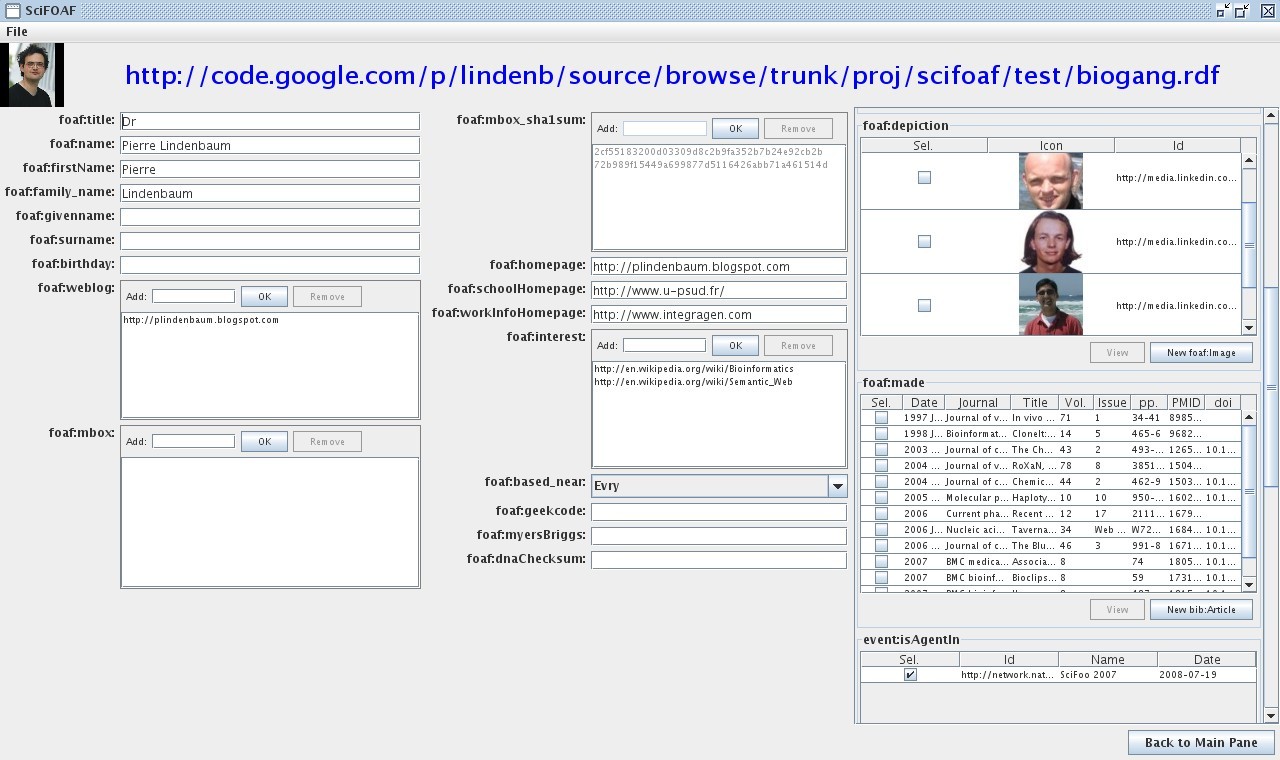
If you're following me on twitter or on friendfeed you may know that I've re-written a new version of SciFOAF.

Here is the documentation:


What is SciFOAF


SciFOAF is the second version of a tool I created to build a FOAF/RDF file from your publications in ncbi/pubmed. The FOAF project defines a semantic format based on RDF/XML to define persons or groups, their relationships, as well as their basic properties such as name, e-mail address, subjects of interest, publications, and so on... This FOAF profile can be used to describe your work, your laboratory, your contacts.
The first version was introduced in 2006 here as a java webstart interface and had many problems:

  • the RDF file could not be loaded/saved

  • only a few properties could be edited

  • authors'name definition may vary from one journal to another as some journal may use the initial of an author while another may use the complete first name.

  • the interaction was just a kind of multiple-choice questionnaire


The new version now uses the Jena API, the rdf repository can be loaded and saved.

Requirements


Downloading SciFOAF


A *.jar file should be available for download at http://lindenb.googlecode.com/files/scifoaf.jar.

Running SciFOAF


Setup the CLASSPATH
export JENA_LIB=your_path_to/Jena/lib
export CLASSPATH=${JENA_LIB}/antlr-2.7.5.jar:${JENA_LIB}/arq-extra.jar:${JENA_LIB}/arq.jar:${JENA_LIB}/commons-logging-1.1.1.jar:${JENA_LIB}/concurrent.jar:${JENA_LIB}/icu4j_3_4.jar:${JENA_LIB}/iri.jar:${JENA_LIB}/jena.jar:${JENA_LIB}/jenatest.jar:${JENA_LIB}/json.jar:${JENA_LIB}/junit.jar:${JENA_LIB}/log4j-1.2.12.jar:${JENA_LIB}/lucene-core-2.3.1.jar:${JENA_LIB}/stax-api-1.0.jar:${JENA_LIB}/wstx-asl-3.0.0.jar:${JENA_LIB}/xercesImpl.jar:${JENA_LIB}/xml-apis.jar:YOUR_PATH_TO/scifoaf.jar

Run SciFOAF
java org.lindenb.scifoaf.SciFOAF

the first time your run SciFOAF, You're prompted to give yourself an URI. The best choice would be to give the URL where your foaf file will be stored or the URL of your personnal homepage or blog. On startup a file called foaf.rdf will be created in your home directory. Alternatively you can specify a file on the command line.
When the application is closed, the FOAF model will be saved back to the file.

The Main Pane


The first window contains a sequence of tab Each tab fits to a given rdf Class:

  • foaf:Person

  • geo:Place

  • bibo:Article

  • ...


For each tab, a button "New ...." creates a new instance of the given Class.

Building your profile


Add a foaf:Image


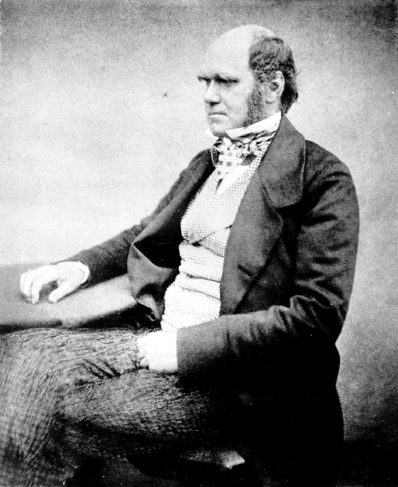
Add the URL of the picture, for example: http://upload.wikimedia.org/wikipedia/commons/4/42/Charles_Darwin_aged_51.jpg.

Add an bibo:Article


enter the PMID of the artcle

Add a geo:Place


SciFOAF, uses the geonames.org API.

Add a foaf:Person


You can the link this person to his publication, his foaf:based_near, the persons he knows..
SciFOAF 2.0

Etc...


Create foaf:Group, event:Event, doap:Project....

Exporting to KML


(Experimental) In menu "File' select 'Export to KML'. SciFOAF will export a KML file containing the geolocalized foaf:Persons.
A test is available here and is visible in maps.google.com at http://maps.google.com/maps?q=http://yokofakun.....

Exporting to XHTML+SVG


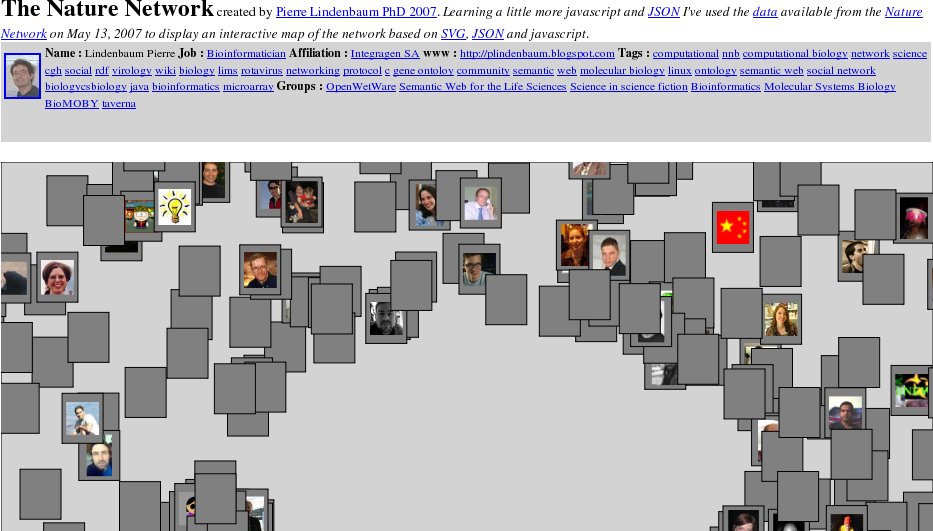
(Experimental) In menu "File' select 'Export to XHTML'. Here, I've roughly copied the tool I wrote for exploring the Nature Network using SVG/javscript/JSON/XTML. Many things remain to do.
Nature Network

Loading a Batch of Articles


In the main panel, for bibo:Article a button can be used to load a batch of articles.
On ncbi/pubmed, perform a query, choose
Display: and then . Copy the list of PMID and paste it in the "Load Batch" dialog, press OK. After a moment, all the articles are uploaded in the RDF model.

Example


A RDF File describing a few persons in the Biogang is available here.

Source Code


The source code is available on http://code.google.com/p/lindenb/.
The ant file is in
lindenb/proj/scifoaf/build.xml
.


Pierre

01 July 2008

Bioinformatics Zen : Bioinformatics Career Survey

Via Bioinformatics Zen:


If you’d like to embed this form in your own webpage or blog, using the following HTML.

<iframe src="http://spreadsheets.google.com/embeddedform?key=pdgOWoFpnRtwTMsOuSjN2YA&hl=en_GB" width="350" height="3150" frameborder="0" marginheight="0" marginwidth="0">Loading...</iframe>

Parsing JSON with javacc my Notebook.

Although I didn't wrote a new great programming language, I had a little experience with C lexers/parsers especialy with lex/yacc|flex/bison , a LALR parser. Now I'm programming in Java, I've been looking for the parsers available for this language: the most popular tools seems to be the top-down parsers javacc and antlr. In this post I show how I wrote a simple javacc parser reading a JSON entry (this is just an exercice, it is also easy to write this kind of parser using java.io.StreamTokenizer or java.util.Scanner).
First of all I found that the documentation was very limited and unlike Bison, I had the feeling that the javacc tutorial was a kind of "Look a the examples, isn't it cool ?"? I just writing my notebook here, so on my side I won't explain how I think I've understand how javacc works :-).
OK now, let's go back, to our JSON grammar and to the content of the javacc file.

The file is called JSONHandler.jj, it contains a java class JSONHandler with a main calling a method object after reading the input from stdin. This method will parse the json stream , transform it into a java object and echo it on stderr. The class is delimited by the keywords PARSER_BEGIN and PARSER_END


PARSER_BEGIN(JSONHandler)
public class JSONHandler {
public static void main(String args[])
{
try
{
JSONHandler parser = new JSONHandler(System.in);
Object o=parser.object();
System.err.println("JAVA OBJECT: "+o);
} catch(Exception err)
{
err.printStackTrace();
}
}
}
PARSER_END(JSONHandler)


Next we declare that the blank characters will be ignored:
SKIP :
{
" "
| "\t"
| "\n"
| "\r"
}


We then declare the lexical tokens (numbers, string, quoted strings) using a BNF grammar. As an example, here, a SIMPLE_QUOTE_LITERAL starts and ends with "\'" , it contains an unlimited number of ("escaped C special characters" or "normal characters").

TOKEN : /* LITERALS */
{
<#LETTER: ["_","a"-"z","A"-"Z"] >
| <#DIGIT: ["0"-"9"] >
| <#SIGN: ["-","+"]>
| <#EXPONENT: ("E"|"e") (<SIGN>)? (<DIGIT>)+
>
| <FLOATING_NUMBER: (<DIGIT>)* "." (<DIGIT>)* (<EXPO
NENT>)?
| (<DIGIT>)+ (<EXPONENT>) >
| <INT_NUMBER: (<DIGIT>)+ >
| <IDENTIFIER: <LETTER> (<LETTER>|<DIGIT>|<->)* >
| <#ESCAPE_CHAR: "\\" ["n","t","b","r","f","\\","'","\""]
>
| <SIMPLE_QUOTE_LITERAL:
"\'"
( (~["\'","\\","\n","\r"])
| <ESCAPE_CHAR>
)*
"\'"
>
|
<DOUBLE_QUOTE_LITERAL:
"\""
( (~["\"","\\","\n","\r"])
| <ESCAPE_CHAR>
)*
"\""
>
}


As we saw, the parser starts is job by invoking the object method. We expect here a JSON array or a JSON object or another identifier (null ||false||true||string). Those choices store their results in the variable o. This method returns a java.lang.Object.

public Object object():
{Object o;}
{
(
o=array()
| o= map()
| o= identifier()
)
{return o;}
}


JSON arrays will be returned as java.util.Vector<Object>. A JSON array is identified as starting by "[" and ending with "]", it contains zero or more JSON objects separated with a comma. Each time an element of this array is found, it is added in the vector. at the end, the vector is returned as the value of this array.
public Vector<Object> array():
{Vector<Object> vector= new Vector<Object>(); Object o;}
{
"[" ( o= object() {vector.addElement(o);} ("," o=object() {vector.addElement(o);} ) * )? "]"
{
return vector;
}
}


A JSON identifier can be a number, a string, a quoted string (need to be un-escaped), null, true or false. The content of this lexical token is obtained via the Token object which class is generated by javacc.

public Object identifier():
{Token t;}
{
(
t=<FLOATING_NUMBER>
{
return new Double(t.image);
}
| t=<INT_NUMBER>
{
return new Long(t.image);
}
| t=<IDENTIFIER>
{
if(t.image.equals("true"))
{
return Boolean.TRUE;
}
else if(t.image.equals("false"))
{
return Boolean.FALSE;
}
else if(t.image.equals("null"))
{
return null;
}
return t.image;
}
| t=<SIMPLE_QUOTE_LITERAL>
{
return unescape(t.image);
}
| t=<DOUBLE_QUOTE_LITERAL>
{
return unescape(t.image);
}
)
}


JSON Object will be returned as java.util.HashMap. A JSON Object starts with '{' and ends with '}'. In this case, we're passing this map as an argument each time the parser finds a pair of key/value.

public HashMap<String,Object> map():
{HashMap<String,Object> map= new HashMap<String,Object>(); }
{
"{" ( keyValue(map) ("," keyValue(map))*)? "}"
{
return map;
}
}

public void keyValue( HashMap<String,Object> map):
{Object k; Object v;}
{
(k=identifier() ":" v=object())
{
if(k==null) throw new ParseException("null cannot be used as key in object");
if(!(k instanceof String)) throw new ParseException(k.toString()+"("+k.getClass()+") cannot
be used as key in object");
map.put(k.toString(),v);
}
}


Compilation:
javacc JSONHandler.jj
Java Compiler Compiler Version 4.0 (Parser Generator)
(type "javacc" with no arguments for help)
Reading from file JSONHandler.jj . . .
Parser generated successfully.
javac JSONHandler.java


Testing:
Here is the content of test.json
{
organisms:[
{
id:10929,
name:"Bovine Rotavirus"
},
{
id:9606,
name:"Homo Sapiens"
}
],
proteins:[
{
label:"NSP3",
description:"Rotavirus Non Structural Protein 3",
organism-id: 10929,
acc: "ACB38353"
},
{
label:"EIF4G",
description:"eukaryotic translation initiation factor 4 gamma",
organism-id: 9606,
acc:"AAI40897"
}
],
interactions:[
{
label:"NSP3 interacts with EIF4G1",
pubmed-id:[77120248,38201627],
proteins:["ACB38353","AAI40897"]
}
]
}


This file is parsed, a *java* object is returned and printed on screen.
java JSONHandler < test.json
JAVA OBJECT: {organisms=[{id=10929, name=Bovine Rotavirus}, {id=9606, name=Homo Sapiens}],
proteins=[{description=Rotavirus Non Structural Protein 3, organism-id=10929, label=NSP3,
acc=ACB38353}, {description=eukaryotic translation initiation factor 4 gamma,
organism-id=9606, label=EIF4G, acc=AAI40897}], interactions=[{pubmed-id=[77120248, 38201627],
label=NSP3 interacts with EIF4G1, proteins=[ACB38353, AAI40897]}]}


Here is the complete javacc source code:
PARSER_BEGIN(JSONHandler)
import java.util.Vector;
import java.util.HashMap;

public class JSONHandler {


public static void main(String args[])
{
try
{
JSONHandler parser = new JSONHandler(System.in);
Object o=parser.object();
System.err.println("JAVA OBJECT: "+o);
} catch(Exception err)
{
err.printStackTrace();
}
}

/** unescape a C string */
private static String unescape(String s)
{
StringBuilder sb= new StringBuilder(s.length());
for(int i=1;i< s.length()-1;++i)
{
if(s.charAt(i)=='\\')
{
if(i+1< s.length()-1)
{
++i;
switch(s.charAt(i))
{
case '\n': sb.append('\n'); break;
case '\r': sb.append('\r'); break;
case '\\': sb.append('\\'); break;
case 'b': sb.append('\b'); break;
case 't': sb.append('\t'); break;
case 'f': sb.append('\f'); break;
case '\'': sb.append('\''); break;
case '\"': sb.append('\"'); break;
default: sb.append(s.charAt(i));
}
}
}
else
{
sb.append(s.charAt(i));
}
}
return sb.toString();
}

}

PARSER_END(JSONHandler)

SKIP :
{
" "
| "\t"
| "\n"
| "\r"
}


TOKEN : /* LITERALS */
{
<#LETTER: ["_","a"-"z","A"-"Z"] >
| <#DIGIT: ["0"-"9"] >
| <#SIGN: ["-","+"]>
| <#EXPONENT: ("E"|"e") (<SIGN>)? (<DIGIT>)+ >
| <FLOATING_NUMBER: (<DIGIT>)* "." (<DIGIT>)* (<EXPONENT>)?
| (<DIGIT>)+ (<EXPONENT>) >
| <INT_NUMBER: (<DIGIT>)+ >
| <IDENTIFIER: <LETTER> (<LETTER>|<DIGIT>|"-")* >
| <#ESCAPE_CHAR: "\\" ["n","t","b","r","f","\\","'","\""] >
| <SIMPLE_QUOTE_LITERAL:
"\'"
( (~["\'","\\","\n","\r"])
| <ESCAPE_CHAR>
)*
"\'"
>
|
<DOUBLE_QUOTE_LITERAL:
"\""
( (~["\"","\\","\n","\r"])
| <ESCAPE_CHAR>
)*
"\""
>
}


public Object object():
{Object o;}
{
(
o=array()
| o= map()
| o= identifier()
)
{return o;}
}

public Object identifier():
{Token t;}
{
(
t=<FLOATING_NUMBER>
{
return new Double(t.image);
}
| t=<INT_NUMBER>
{
return new Long(t.image);
}
| t=<IDENTIFIER>
{
if(t.image.equals("true"))
{
return Boolean.TRUE;
}
else if(t.image.equals("false"))
{
return Boolean.FALSE;
}
else if(t.image.equals("null"))
{
return null;
}
return t.image;
}
| t=<SIMPLE_QUOTE_LITERAL>
{
return unescape(t.image);
}
| t=<DOUBLE_QUOTE_LITERAL>
{
return unescape(t.image);
}
)
}

public Vector<Object> array():
{Vector<Object> vector= new Vector<Object>(); Object o;}
{
"[" ( o=object() {vector.addElement(o);} ("," o=object() {vector.addElement(o);} ) * )? "]"
{
return vector;
}
}

public HashMap<String,Object> map():
{HashMap<String,Object> map= new HashMap<String,Object>(); }
{
"{" ( keyValue(map) ("," keyValue(map))*)? "}"
{
return map;
}
}

public void keyValue( HashMap<String,Object> map):
{Object k; Object v;}
{
(k=identifier() ":" v=object())
{
if(k==null) throw new ParseException("null cannot be used as key in object");
if(!(k instanceof String)) throw new ParseException(k.toString()+"("+k.getClass()+") cannot be used as key in object");
map.put(k.toString(),v);
}
}


That's it. What's next ? jjtree is another component of the javacc package and seems to be a promising tool: it builds a tree structure from the grammar. The nodes of this tree can then be visited just like in a DOM/XML document and a language can be implemented, but here again, the documentation is succinct.

bye ! bye ! my private web server !

I'm about to leave my current job. Thus, soon or later, the web server where I stored my stuff will diseappear. Most of those items have been introduced on this blog.


Pierre

10 June 2008

Pubmed, impact factors, sorting and FriendFeed

I recently said on twitter that I wished I could sort the articles on pubmed using the impact factors of the journals. What followed was a demonstration of the power of friendfeed and was also observed under some other circumstances by Deepak Singh, Pedro Beltrao and some others... Within a day several persons joined the conversation on friendfeed and among them, Lars Juhl Jensen and Deepak suggested me to have a look at http://www.eigenfactor.org where the Eigenfactor is a measure of the journal's total importance to the scientific community. I must also cite Euan who was inspired by this discussion and created PubmedFaceoff, a photorealistic variant of the Chernoff Faces visualization technique based on pubmed.

Now let's go back to my sorting problem: I've joined the data from www.eigenfactor.org (with the kind permission of Carl Bergstrom) and from http://www.ncbi.nlm.nih.gov/entrez/citmatch_help.html#JournalLists and I've uploaded this new dataset on IBM-ManyEyes:


I wrote a java program reading a set of pubmed articles formatted in XML and using the scoring dataset. The algorithm is trivial: the XML element of the articles are removed from their parent node, sorted on their 'eigenfactors' retrieved from the journal <NlmId>, and then inserted back.

The source is available here

The executable jar (containing the scoring dataset) is available here:


Here is an example: I want to sort the articles about Charles Darwin. I've feched all the 372 articles in XML from this query
java -jar lindenb/build/sortpubmed.jar ~/pubmed_result.txt > result.xml

Here are the first articles:

    * Schmidhuber, Jürgen (Apr. 2008). "Comparing the legacies of Gauss, Pasteur and Darwin". Nature 452 (7187): 530. doi:10.1038/452530b. PMID 18256649. 
* Padian, Kevin (Feb. 2008). "Darwin's enduring legacy". Nature 451 (7179): 632-4. doi:10.1038/451632a. PMID 18305520.
* Odling-Smee, Lucy (Mar. 2007). "Darwin and the 20-year publication gap". Nature 446 (7135): 478-9. doi:10.1038/446478a. PMID 17392756.
* Oliveira, João Gama; Barabási Albert-László (Oct. 2005). "Human dynamics: Darwin and Einstein correspondence patterns". Nature 437 (7063): 1251. doi:10.1038/4371251a. PMID 16724015.
* Kohn, David; Murrell Gina, Parker John, Whitehorn Mark (Aug. 2005). "What Henslow taught Darwin". Nature 436 (7051): 643-5. doi:10.1038/436643a. PMID 16079834.
* Ridley, Matt (Sep. 2004). "Crick and Darwin's shared publication in Nature". Nature 431 (7006): 244. doi:10.1038/431244a. PMID 15372004.
* Gruber, J W (Oct. 2001). "Owen was right, as Darwin's work continues". Nature 413 (6857): 669. doi:10.1038/35099725. PMID 11449244.
* Padian, K (Jul. 2001). "Owen's Parthian shot". Nature 412 (6843): 123-4. doi:10.1038/35084289. PMID 11606991.
* Rhodes, F H (. 1983). "Gradualism, punctuated equilibrium and the Origin of Species". Nature 305 (5932): 269-72. PMID 6353241.
* Maynard-Smith, J (Apr. 1982). "The century since Darwin". Nature 296 (5858): 599-601. PMID 7040979.
* "Darwin's questions" (Jan. 1969). Nature 221 (5178): 313. PMID 4884839.
* Hector, Andy; Hooper Rowan (Jan. 2002). "Ecology. Darwin and the first ecological experiment". Science 295 (5555): 639-40. doi:10.1126/science.1064815. PMID 11809960.
* Corsi (May. 1987). "Further Letters of Darwin: The Correspondence of Charles Darwin". Science 236 (4804): 988-989. doi:10.1126/science.236.4804.988. PMID 17812771.
* Schweber (May. 1985). "Darwin's Earliest Letters: The Correspondence of Charles Darwin". Science 228 (4701): 838-841. doi:10.1126/science.228.4701.838. PMID 17815024.
* Lewin, R (Aug. 1982). "Darwin died at a most propitious time". Science 217 (4561): 717-8. PMID 7048528.
* Gould, S J (Apr. 1982). "Darwinism and the expansion of evolutionary theory". Science 216 (4544): 380-7. PMID 7041256.
* Zirkle (May. 1964). "Charles Darwin". Science 144 (3619): 724-725. doi:10.1126/science.144.3619.724-a. PMID 17807061.
* Cholodny (Nov. 1937). "CHARLES DARWIN AND THE MODERN THEORY OF TROPISMS". Science 86 (2238): 468. doi:10.1126/science.86.2238.468. PMID 17815459.
* Leidy (Sep. 1929). "CEREMONY ATTENDING THE OPENING OF DOWN HOUSE, THE HOME OF CHARLES DARWIN". Science 70 (1810): 228-231. doi:10.1126/science.70.1810.228. PMID 17775389.
* Osborn (Jun. 1929). "GIFT TO DOWN HOUSE OF THE ORIGINAL LETTERS OF CHARLES DARWIN TO FRITZ MULLER". Science 69 (1799): 645. doi:10.1126/science.69.1799.645. PMID 17791947.
* Osborn (Dec. 1926). "A CONTEMPORARY OF CHARLES DARWIN". Science 64 (1669): 623-624. doi:10.1126/science.64.1669.623-a. PMID 17834475.
* Sampson (Sep. 1909). "LETTERS FROM CHARLES DARWIN". Science 30 (766): 303-304. doi:10.1126/science.30.766.303. PMID 17837456.
* Ayala, Francisco J (May. 2007). "Darwin's greatest discovery: design without designer". Proc. Natl. Acad. Sci. U.S.A. 104 Suppl 1: 8567-73. doi:10.1073/pnas.0701072104. PMID 17494753.

I'm looking for a job !

Hi all,
I've just given my letter of resignation to my current employer , thus I'll be free from my professional obligations on September 1st and from now on I'm looking for a new fascinating job combining biology and informatics near Paris, France. This blog is a proof of my passion and my motivation for this area of interest. Recruiters can contact me via e-mail ( plindenbaum at yahoo fr ) and consult my resume on linkedin at http://www.linkedin.com/in/lindenbaum.

Pierre Lindenbaum PhD


Après avoir remis ma lettre de démission à mon employeur actuel, je serai libre de mes obligations professionnelles à compter du 1er septembre 2008. Je suis donc à la recherche de toute opportunité d'emploi combinant la biologie et l'informatique dans la région de Paris. Ce blog étant une preuve de ma passion et de ma motivation pour ce sujet. Les recruteurs intéressés par mon profil peuvent consulter mon CV sur linkedin http://www.linkedin.com/in/lindenbaum et me joindre par mail à "plindenbaum at yahoo fr"

Pierre Lindenbaum PhD

27 May 2008

NCBI Blast+ XSLT => XHTML + SVG

This post was inspired by the article Processing and duplicons on human chromosomes sent by Paulo Nuin yesterday and the short discussion that followed on FriendFeed. Paulo described in this article how the processing tool was used to display an output of ncbi-blast.

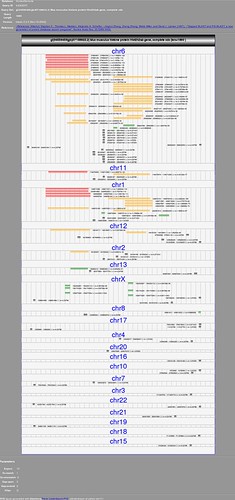
Here I show how a XSLT stylesheet can be used to transform a Blast into a XHTML+SVG page.

The stylesheet described here is available [here]


Here is how it works, at the beginning we've got a blast output in XML (here the query was a murine histone vs the human genome)

<?xml version="1.0"?>
<!DOCTYPE BlastOutput PUBLIC "-//NCBI//NCBI BlastOutput/EN" "NCBI_BlastOutput.dtd">
<BlastOutput>
<BlastOutput_program>blastn</BlastOutput_program>
<BlastOutput_version>blastn 2.2.5 [Nov-16-2002]</BlastOutput_version>
<BlastOutput_reference>~Reference: Altschul, Stephen F., Thomas L. Madden, Alejandro A. Schaffer, ~Jin
ghui Zhang, Zheng Zhang, Webb Miller, and David J. Lipman (1997), ~&quot;Gapped BLAST and PSI-BLAST: a new
generation of protein database search~programs&quot;, Nucleic Acids Res. 25:3389-3402.</BlastOutput_r
eference>
<BlastOutput_db>HumanGenome</BlastOutput_db>
<BlastOutput_query-ID>lcl|QUERY</BlastOutput_query-ID>
<BlastOutput_query-def>gi|34556456|gb|AY158922.2| Mus musculus histone protein Hist2h2ab gene, complet
e cds</BlastOutput_query-def>
<BlastOutput_query-len>1680</BlastOutput_query-len>
<BlastOutput_param>
<Parameters>
<Parameters_expect>10</Parameters_expect>
<Parameters_sc-match>1</Parameters_sc-match>
<Parameters_sc-mismatch>-3</Parameters_sc-mismatch>
<Parameters_gap-open>5</Parameters_gap-open>
<Parameters_gap-extend>2</Parameters_gap-extend>
<Parameters_filter>D</Parameters_filter>
</Parameters>
</BlastOutput_param>
<BlastOutput_iterations>
<Iteration>
<Iteration_iter-num>1</Iteration_iter-num>
<Iteration_hits>
<Hit>
<Hit_num>1</Hit_num>
<Hit_id>gnl|BL_ORD_ID|32</Hit_id>
<Hit_def>chr6</Hit_def>
<Hit_accession>32</Hit_accession>
<Hit_len>170975699</Hit_len>
<Hit_hsps>
<Hsp>
<Hsp_num>1</Hsp_num>
<Hsp_bit-score>444.541</Hsp_bit-score>
<Hsp_score>224</Hsp_score>
<Hsp_evalue>7.76885e-122</Hsp_evalue>
<Hsp_query-from>209</Hsp_query-from>
<Hsp_query-to>580</Hsp_query-to>
<Hsp_hit-from>27883967</Hsp_hit-from>
<Hsp_hit-to>27884338</Hsp_hit-to>
<Hsp_query-frame>1</Hsp_query-frame>
<Hsp_hit-frame>1</Hsp_hit-frame>
<Hsp_identity>335</Hsp_identity>
<Hsp_positive>335</Hsp_positive>
<Hsp_align-len>372</Hsp_align-len>
<Hsp_qseq>ATGTCTGGCCGTGGCAAACAGGGAGGCAAGGCCCGCGCCAAGGCCAAGTCGCGGTCTTCCCGGGCCGGGCTACAGTTCCC
GGTGGGGCGTGTGCACCGGCTGCTGCGCAAGGGCAACTACGCGGAGCGCGTGGGTGCCGGCGCGCCGGTATACATGGCGGCGGTGCTGGAGTACCTAACGGCCGAGATCC
TGGAGCTGGCGGGCAACGCGGCCCGCGACAACAAGAAGACGCGCATCATCCCGCGCCACCTGCAGCTGGCCATCCGCAACGACGAGGAGCTCAACAAGCTGCTGGGCAAA
GTGACGATCGCACAGGGCGGCGTCCTGCCCAACATCCAGGCCGTGCTGCTGCCCAAGAAGACCGAGAGCCAC</Hsp_qseq>
<Hsp_hseq>ATGTCTGGGCGTGGCAAGCAGGGAGGCAAAGCTCGCGCCAAGGCCAAGACCCGCTCTTCTCGGGCCGGGCTTCAGTTTCC
CGTAGGCCGAGTGCATCGCCTGCTCCGCAAAGGCAACTATGCGGAGCGGGTCGGTGCTGGAGCGCCGGTGTACCTGGCGGCGGTGCTGGAGTACCTGACCGCCGAGATCC
TGGAGCTGGCTGGCAACGCGGCCCGCGACAACAAGAAGACTCGCATCATCCCGCGTCACCTCCAGCTGGCCATCCGCAACGATGAGGAGCTCAACAAGCTTCTGGGCAAA
GTCACCATCGCACAGGGTGGCGTCCTGCCCAACATCCAGGCCGTGCTACTGCCCAAGAAGACCGAGAGCCAC</Hsp_hseq>
<Hsp_midline>|||||||| |||||||| ||||||||||| || ||||||||||||||| | || ||||| ||||||||||| |||||
|| || || || ||||| || ||||| ||||| |||||||| |||||||| || ||||| || |||||||| ||| |||||||||||||||||||||| || |||||||
||||||||||||| ||||||||||||||||||||||||||||| |||||||||||||| ||||| |||||||||||||||||||| ||||||||||||||||| ||||||
||||| || ||||||||||| ||||||||||||||||||||||||||||| ||||||||||||||||||||||||</Hsp_midline>
</Hsp>
<Hsp>
<Hsp_num>2</Hsp_num>
<Hsp_bit-score>420.753</Hsp_bit-score>
<Hsp_score>212</Hsp_score>
<Hsp_evalue>1.1255e-114</Hsp_evalue>
<Hsp_query-from>580</Hsp_query-from>
<Hsp_query-to>209</Hsp_query-to>
<Hsp_hit-from>27890126</Hsp_hit-from>
<Hsp_hit-to>27890497</Hsp_hit-to>
<Hsp_query-frame>1</Hsp_query-frame>
<Hsp_hit-frame>-1</Hsp_hit-frame>
<Hsp_identity>332</Hsp_identity>
<Hsp_positive>332</Hsp_positive>
<Hsp_align-len>372</Hsp_align-len>
<Hsp_qseq>GTGGCTCTCGGTCTTCTTGGGCAGCAGCACGGCCTGGATGTTGGGCAGGACGCCGCCCTGTGCGATCGTCACTTTGCCCA
GCAGCTTGTTGAGCTCCTCGTCGTTGCGGATGGCCAGCTGCAGGTGGCGCGGGATGATGCGCGTCTTCTTGTTGTCGCGGGCCGCGTTGCCCGCCAGCTCCAGGATCTCG
GCCGTTAGGTACTCCAGCACCGCCGCCATGTATACCGGCGCGCCGGCACCCACGCGCTCCGCGTAGTTGCCCTTGCGCAGCAGCCGGTGCACACGCCCCACCGGGAACTG
TAGCCCGGCCCGGGAAGACCGCGACTTGGCCTTGGCGCGGGCCTTGCCTCCCTGTTTGCCACGGCCAGACAT</Hsp_qseq>
<Hsp_hseq>GTGGCTCTCAGTTTTCTTTGGCAGCAGCACGGCCTGGATGTTGGGCAGGACGCCACCCTGTGCGATGGTGACTTTGCCCA
GAAGCTTGTTGAGCTCCTCATCGTTGCGGATGGCCAGCTGGAGGTGACGCGGGATGATGCGAGTCTTCTTGTTGTCGCGGGCCGCGTTGCCAGCCAGCTCCAGGATCTCG
GCGGTCAGGTACTCCAGCACCGCCGCCAGGTACACCGGCGCTCCAGCACCGACCCGCTCCGCATAGTTGCCTTTGCGGAGCAGGCGATGCACTCGGCCTACGGGAAACTG
AAGCCCGGCCCGAGAAGAGCGGGTCTTGGCCTTGGCGCGAGCTTTGCCTCCCTGCTTACCACGCCCAGACAT</Hsp_hseq>
<Hsp_midline>||||||||| || ||||| ||||||||||||||||||||||||||||||||||| ||||||||||| || |||||||
|||| ||||||||||||||||| |||||||||||||||||||| ||||| |||||||||||||| ||||||||||||||||||||||||||||| |||||||||||||||
||||| || |||||||||||||||||||||| ||| |||||||| || ||||| || |||||||| |||||||| ||||| ||||| || ||||| || || || || ||
||| ||||||||||| ||||| || | ||||||||||||||| || ||||||||||| || ||||| ||||||||</Hsp_midline>
</Hsp>

(...)

</Hit_hsps>
</Hit>
</Iteration_hits>
<Iteration_stat>
<Statistics>
<Statistics_db-num>1</Statistics_db-num>
<Statistics_db-len>245522847</Statistics_db-len>
<Statistics_hsp-len>0</Statistics_hsp-len>
<Statistics_eff-space>5.13463e+12</Statistics_eff-space>
<Statistics_kappa>0.710605</Statistics_kappa>
<Statistics_lambda>1.37407</Statistics_lambda>
<Statistics_entropy>1.30725</Statistics_entropy>
</Statistics>
</Iteration_stat>
</Iteration>
</BlastOutput_iterations>
</BlastOutput>


And the XSLT stylesheet:
1 <?xml version="1.0" encoding="UTF-8"?>
2 <xsl:stylesheet
3 version="1.0"
4 xmlns:xsl="http://www.w3.org/1999/XSL/Transform"
5 xmlns:svg="http://www.w3.org/2000/svg"
6 xmlns:xlink="http://www.w3.org/1999/xlink"
7 xmlns:h="http://www.w3.org/1999/xhtml"
8 >


17 <!-- ========================================================================= -->
18 <xsl:output method='xml' indent='yes' omit-xml-declaration="no"/>
19 <!-- we preserve the spaces in that element -->
20 <xsl:preserve-space elements="svg:style h:style" />
21
22 <!-- ========================================================================= -->
23 <!-- the width of the SVG -->
24 <xsl:variable name="svg-width">800</xsl:variable>
25 <!-- height of a HSP -->
26 <xsl:variable name="hsp-height">10</xsl:variable>
27 <!-- total number of Hits in first blast iteration -->
28 <xsl:variable name="hit-count"><xsl:value-of select="count(BlastOutput/BlastOutput_iterations/Iteration[1]/Iteration_hits/Hit)"/></xsl:variable>
29 <!-- total number of HSP in first blast iteration -->
30 <xsl:variable name="hsp-count"><xsl:value-of select="count(BlastOutput/BlastOutput_iterations/Iteration[1]/Iteration_hits/Hit/Hit_hsps/Hsp)"/></xsl:variable>
31 <!-- query length (bases or amino acids ) -->
32 <xsl:variable name="query-length"><xsl:value-of select="BlastOutput/BlastOutput_query-len"/></xsl:variable>
33 <!-- margin between two hits -->
34 <xsl:variable name="space-between-hits"><xsl:value-of select="3* $hsp-height"/></xsl:variable>
35 <!-- height of all hits -->
36 <xsl:variable name="hits-height"><xsl:value-of select="$hsp-count * $hsp-height + ($hit-count + 1) * $space-between-hits"/></xsl:variable>
37 <!-- size of the top header -->
38 <xsl:variable name="header-height">50</xsl:variable>
39
40 <!-- ========================================================================= -->
41
42 <!-- matching the root node -->
43 <xsl:template match="/">
44 <!-- start XHTML -->
45 <h:html>
46 <h:head>
47 <h:style type="text/css">
48 body {
49 font-size:10px;
50 font-family:Helvetica;
51 background-color:rgb(150,150,150);
52 color:white;
53 }
54 </h:style>
55 <h:title><xsl:value-of select="BlastOutput/BlastOutput_query-def"/></h:title>
56 </h:head>
57 <h:body>
58 <h:h1>Blast Results</h:h1>
59 <h:div>
60 <h:h3>Parameters</h:h3>
61 <h:table>
62 <h:tr><h:th>Database</h:th><h:td><xsl:value-of select="BlastOutput/BlastOutput_db"/></h:td></h:tr>
63 <h:tr><h:th>Query ID</h:th><h:td><xsl:value-of select="BlastOutput/BlastOutput_query-ID"/></h:td></h:tr>
64 <h:tr><h:th>Query Def.</h:th><h:td><h:b><xsl:value-of select="BlastOutput/BlastOutput_query-def"/></h:b></h:td></h:tr>
65 <h:tr><h:th>Query Length</h:th><h:td><h:b><xsl:value-of select="BlastOutput/BlastOutput_query-len"/></h:b></h:td></h:tr>
66 <h:tr><h:th>Version</h:th><h:td><xsl:value-of select="BlastOutput/BlastOutput_version"/></h:td></h:tr>
67 <h:tr><h:th>Reference</h:th><h:td><h:a href="http://www.ncbi.nlm.nih.gov/pubmed/9254694"><xsl:value-of select="BlastOutput/BlastOutput_reference"/></h:a></h:td></h:tr>
68 </h:table>
69 </h:div>
70 <h:hr/>
71 <h:div style="text-align:center">
72
73 <!-- starts SVG figure -->
74 <xsl:element name="svg:svg">
75 <xsl:attribute name="version">1.0</xsl:attribute>
76 <xsl:attribute name="width"><xsl:value-of select="$svg-width"/></xsl:attribute>
77 <xsl:attribute name="height"><xsl:value-of select="$hits-height + $header-height "/></xsl:attribute>
78 <svg:title><xsl:value-of select="BlastOutput/BlastOutput_query-def"/></svg:title>
79 <svg:defs>
80 <svg:style type="text/css">
81 text.t1 {
82 fill:black;
83 font-size:<xsl:value-of select="$hsp-height - 2"/>px;
84 font-family:Helvetica;
85 }
86 text.t2 {
87 fill:blue;
88 font-size:<xsl:value-of select="$space-between-hits - 2"/>px;
89 font-family:Helvetica;
90 text-anchor:middle;
91 }
92 text.title {
93 fill:white;
94 stroke:black;
95 font-size:12px;
96 font-family:Helvetica;
97 text-anchor:middle;
98 alignment-baseline:middle;
99 }
100 line.grid {
101 stroke:lightgray;
102 stroke-width:1.5px;
103 }
104
105 rect.hit {
106 fill:none;
107 stroke:darkgray;
108 stroke-width:1px;
109 }
110 </svg:style>
111
112 <svg:linearGradient x1="0%" y1="0%" x2="0%" y2="100%" id="score1">
113 <svg:stop offset="5%" stop-color="red" />
114 <svg:stop offset="50%" stop-color="whitesmoke" />
115 <svg:stop offset="95%" stop-color="red" />
116 </svg:linearGradient>
117 <svg:linearGradient x1="0%" y1="0%" x2="0%" y2="100%" id="score2">
118 <svg:stop offset="5%" stop-color="orange" />
119 <svg:stop offset="50%" stop-color="whitesmoke" />
120 <svg:stop offset="95%" stop-color="orange" />
121 </svg:linearGradient>
122 <svg:linearGradient x1="0%" y1="0%" x2="0%" y2="100%" id="score3">
123 <svg:stop offset="5%" stop-color="green" />
124 <svg:stop offset="50%" stop-color="whitesmoke" />
125 <svg:stop offset="95%" stop-color="green" />
126 </svg:linearGradient>
127 <svg:linearGradient x1="0%" y1="0%" x2="0%" y2="100%" id="score4">
128 <svg:stop offset="5%" stop-color="blue" />
129 <svg:stop offset="50%" stop-color="whitesmoke" />
130 <svg:stop offset="95%" stop-color="blue" />
131 </svg:linearGradient>
132 <svg:linearGradient x1="0%" y1="0%" x2="0%" y2="100%" id="score5">
133 <svg:stop offset="5%" stop-color="black" />
134 <svg:stop offset="50%" stop-color="whitesmoke" />
135 <svg:stop offset="95%" stop-color="black" />
136 </svg:linearGradient>
137 </svg:defs>
138
139 <xsl:element name="svg:rect">
140 <xsl:attribute name="x">0</xsl:attribute>
141 <xsl:attribute name="y">0</xsl:attribute>
142 <xsl:attribute name="width"><xsl:value-of select="$svg-width - 1"/></xsl:attribute>
143 <xsl:attribute name="height"><xsl:value-of select="$hits-height + $header-height "/></xsl:attribute>
144 <xsl:attribute name="fill">whitesmoke</xsl:attribute>
145 <xsl:attribute name="stroke">blue</xsl:attribute>
146 </xsl:element>
147
148
149 <xsl:apply-templates select="BlastOutput"/>
150 </xsl:element>
151 <!-- end SVG figure -->
152
153 </h:div>
154 <h:hr/>
155 <xsl:apply-templates select="BlastOutput/BlastOutput_param/Parameters"/>
156 <h:hr/>
157 <h:p><h:b>SVG</h:b> figure generated with <h:a href="http://code.google.com/p/lindenb/source/browse/trunk/src/xsl/blast2svg.xsl">blast2svg</h:a>. <h:a href="http://plindenbaum.blogspot.com">Pierre Lindenbaum PhD</h:a> <h:i>( plindenbaum at yahoo dot fr )</h:i></h:p>
158
159 </h:body>
160 </h:html>
161 </xsl:template>
162 <!-- ========================================================================= -->
163 <!-- display parameters in a HTML table -->
164 <xsl:template match="Parameters">
165 <h:div>
166 <h:h3>Parameters</h:h3>
167 <h:table>
168 <h:tr><h:th>Expect</h:th><h:td><xsl:value-of select="Parameters_expect"/></h:td></h:tr>
169 <h:tr><h:th>Sc-match</h:th><h:td><xsl:value-of select="Parameters_sc-match"/></h:td></h:tr>
170 <h:tr><h:th>Sc-mismatch</h:th><h:td><xsl:value-of select="Parameters_sc-mismatch"/></h:td></h:tr>
171 <h:tr><h:th>Gap-open</h:th><h:td><xsl:value-of select="Parameters_gap-open"/></h:td></h:tr>
172 <h:tr><h:th>Gap-extend</h:th><h:td><xsl:value-of select="Parameters_gap-extend"/></h:td></h:tr>
173 <h:tr><h:th>Filter</h:th><h:td><xsl:value-of select="Parameters_filter"/></h:td></h:tr>
174 </h:table>
175 </h:div>
176 </xsl:template>
177
178
179 <!-- ========================================================================= -->
180 <xsl:template match="BlastOutput">
181 <!-- paint header -->
182 <svg:g>
183 <xsl:element name="svg:rect">
184 <xsl:attribute name="x">0</xsl:attribute>
185 <xsl:attribute name="y">0</xsl:attribute>
186 <xsl:attribute name="width"><xsl:value-of select="$svg-width - 1"/></xsl:attribute>
187 <xsl:attribute name="height"><xsl:value-of select="$header-height - 2"/></xsl:attribute>
188 <xsl:attribute name="fill">url(#score5)</xsl:attribute>
189 <xsl:attribute name="stroke">black</xsl:attribute>
190 </xsl:element>
191
192 <xsl:element name="svg:text">
193 <xsl:attribute name="x"><xsl:value-of select="$svg-width div 2"/></xsl:attribute>
194 <xsl:attribute name="y"><xsl:value-of select="$header-height div 2"/></xsl:attribute>
195 <xsl:attribute name="class">title</xsl:attribute>
196 <xsl:value-of select="BlastOutput_query-def"/> (len=<xsl:value-of select="BlastOutput_query-len"/> )
197 </xsl:element>
198 </svg:g>
199 <xsl:apply-templates select="BlastOutput_iterations/Iteration[1]/Iteration_hits"/>
200 </xsl:template>
201
202 <!-- ========================================================================= -->
203
204 <xsl:template match="Iteration_hits">
205 <xsl:apply-templates select="Hit"/>
206 </xsl:template>
207
208 <!-- ========================================================================= -->
209
210 <xsl:template match="Hit">
211 <!-- count number of preceding hits -->
212 <xsl:variable name="preceding-hits"><xsl:value-of select="count(preceding-sibling::Hit)"/></xsl:variable>
213 <!-- count number of preceding hsp -->
214 <xsl:variable name="preceding-hsp"><xsl:value-of select="count(preceding-sibling::Hit/Hit_hsps/Hsp)"/></xsl:variable>
215 <!-- calculate hieght of this part -->
216 <xsl:variable name="height"><xsl:value-of select="count(Hit_hsps/Hsp)*$hsp-height"/></xsl:variable>
217 <!-- translate this part verticaly -->
218 <xsl:element name="svg:g">
219 <xsl:attribute name="transform">translate(0,<xsl:value-of select="$header-height + $preceding-hsp * $hsp-height + ($preceding-hits + 1) * $space-between-hits "/>)</xsl:attribute>
220 <xsl:attribute name="id">hit-<xsl:value-of select="generate-id(.)"/></xsl:attribute>
221 <xsl:element name="svg:text">
222 <xsl:attribute name="x"><xsl:value-of select="$svg-width div 2"/></xsl:attribute>
223 <xsl:attribute name="y"><xsl:value-of select="-2"/></xsl:attribute>
224 <xsl:attribute name="class">t2</xsl:attribute>
225 <xsl:value-of select="Hit_def"/>
226 </xsl:element>
227 <xsl:element name="svg:rect">
228 <xsl:attribute name="x">0</xsl:attribute>
229 <xsl:attribute name="y">0</xsl:attribute>
230 <xsl:attribute name="width"><xsl:value-of select="$svg-width"/></xsl:attribute>
231 <xsl:attribute name="height"><xsl:value-of select="$height"/></xsl:attribute>
232 <xsl:attribute name="class">hit</xsl:attribute>
233 </xsl:element>
234
235 <xsl:call-template name="grid">
236 <xsl:with-param name="x" select="0"/>
237 <xsl:with-param name="d" select="20"/>
238 <xsl:with-param name="W" select="$svg-width"/>
239 <xsl:with-param name="H" select="$height"/>
240 </xsl:call-template>
241
242 <xsl:apply-templates select="Hit_hsps"/>
243
244
245
246 </xsl:element>
247 </xsl:template>
248
249 <!-- ========================================================================= -->
250 <!-- draw vertical lines , recursive template -->
251 <xsl:template name="grid">
252 <xsl:param name="x" select="0" />
253 <xsl:param name="d" select="20" />
254 <xsl:param name="W" select="0" />
255 <xsl:param name="H" select="0" />
256 <svg:line class="grid" x1="{$x}" x2="{$x}" y1="0" y2="{$H}"/>
257 <xsl:if test="$d + $x &lt; $W">
258 <xsl:call-template name="grid">
259 <xsl:with-param name="x" select="$d + $x"/>
260 <xsl:with-param name="d" select="$d"/>
261 <xsl:with-param name="W" select="$W"/>
262 <xsl:with-param name="H" select="$H"/>
263 </xsl:call-template>
264 </xsl:if>
265 </xsl:template>
266
267 <!-- ========================================================================= -->
268
269 <xsl:template match="Hit_hsps">
270 <xsl:apply-templates select="Hsp"/>
271 </xsl:template>
272
273
274 <!-- ========================================================================= -->
275 <xsl:template match="Hsp">
276 <!-- number of previous hsp in the same Hit -->
277 <xsl:variable name="preceding-hsp"><xsl:value-of select="count(preceding-sibling::Hsp)"/></xsl:variable>
278 <!-- get the 5' position of the hsp in the query -->
279 <xsl:variable name="hsp-left"><xsl:choose>
280 <xsl:when test="Hsp_query-from &lt; Hsp_query-to"><xsl:value-of select="Hsp_query-from"/></xsl:when>
281 <xsl:otherwise><xsl:value-of select="Hsp_query-to"/></xsl:otherwise>
282 </xsl:choose></xsl:variable>
283 <!-- get the 3' position of the hsp in the query -->
284 <xsl:variable name="hsp-right"><xsl:choose>
285 <xsl:when test="Hsp_query-from &lt; Hsp_query-to"><xsl:value-of select="Hsp_query-to"/></xsl:when>
286 <xsl:otherwise><xsl:value-of select="Hsp_query-from"/></xsl:otherwise>
287 </xsl:choose></xsl:variable>
288 <!-- 5' position on screen -->
289 <xsl:variable name="x1"><xsl:value-of select="($hsp-left div $query-length ) * $svg-width"/></xsl:variable>
290 <!-- 3' position on screen -->
291 <xsl:variable name="x2"><xsl:value-of select="($hsp-right div $query-length ) * $svg-width"/></xsl:variable>
292 <!-- label -->
293 <xsl:variable name="label"><xsl:value-of select="Hsp_hit-from"/> - <xsl:value-of select="Hsp_hit-to"/> (<xsl:choose>
294 <xsl:when test="Hsp_query-from &lt; Hsp_query-to">+</xsl:when>
295 <xsl:otherwise>-</xsl:otherwise></xsl:choose>) e=<xsl:value-of select="Hsp_evalue"/></xsl:variable>
296
297 <!-- translate this Hsp verticaly in its Hit -->
298 <xsl:element name="svg:g">
299 <xsl:attribute name="transform">translate(0,<xsl:value-of select="$preceding-hsp * $hsp-height"/>)</xsl:attribute>
300 <xsl:attribute name="id">hsp-<xsl:value-of select="generate-id(.)"/></xsl:attribute>
301 <xsl:attribute name="title"><xsl:value-of select="Hsp_evalue"/></xsl:attribute>
302
303 <!-- paint the Hsp Rectangle -->
304 <xsl:element name="svg:rect">
305 <xsl:attribute name="x"><xsl:value-of select="$x1"/></xsl:attribute>
306 <xsl:attribute name="y">2</xsl:attribute>
307 <xsl:attribute name="width"><xsl:value-of select="$x2 - $x1"/></xsl:attribute>
308 <xsl:attribute name="height"><xsl:value-of select="$hsp-height - 4"/></xsl:attribute>
309 <!-- choose a color according to the e-value -->
310 <xsl:attribute name="fill"><xsl:choose>
311 <xsl:when test="Hsp_evalue &lt; 1E-100">url(#score1)</xsl:when>
312 <xsl:when test="Hsp_evalue &lt; 1E-10">url(#score2)</xsl:when>
313 <xsl:when test="Hsp_evalue &lt; 0.1">url(#score3)</xsl:when>
314 <xsl:when test="Hsp_evalue &lt; 0">url(#score4)</xsl:when>
315 <xsl:otherwise>url(#score5)</xsl:otherwise>
316 </xsl:choose></xsl:attribute>
317 </xsl:element>
318
319 <!-- paint the label according to the position of the Hsp on screen -->
320 <xsl:choose>
321 <xsl:when test="$x2 &lt; (0.75 * $svg-width)">
322 <xsl:element name="svg:text">
323 <xsl:attribute name="class">t1</xsl:attribute>
324 <xsl:attribute name="x"><xsl:value-of select="$x2 + 10 "/></xsl:attribute>
325 <xsl:attribute name="y"><xsl:value-of select="$hsp-height -1"/></xsl:attribute>
326 <xsl:attribute name="text-anchor">start</xsl:attribute>
327 <xsl:value-of select="$label"/>
328 </xsl:element>
329 </xsl:when>
330 <xsl:when test="$x1 &gt; (0.25 * $svg-width)">
331 <xsl:element name="svg:text">
332 <xsl:attribute name="class">t1</xsl:attribute>
333 <xsl:attribute name="x"><xsl:value-of select="$x1 - 10 "/></xsl:attribute>
334 <xsl:attribute name="y"><xsl:value-of select="$hsp-height -1"/></xsl:attribute>
335 <xsl:attribute name="text-anchor">end</xsl:attribute>
336 <xsl:value-of select="$label"/>
337 </xsl:element>
338 </xsl:when>
339 <xsl:otherwise>
340 <xsl:element name="svg:text">
341 <xsl:attribute name="class">t1</xsl:attribute>
342 <xsl:attribute name="x"><xsl:value-of select="($x2 - $x1) div 2 "/></xsl:attribute>
343 <xsl:attribute name="y"><xsl:value-of select="$hsp-height -1"/></xsl:attribute>
344 <xsl:attribute name="text-anchor">middle</xsl:attribute>
345 <xsl:value-of select="$label"/>
346 </xsl:element>
347 </xsl:otherwise>
348 </xsl:choose>
349
350 </xsl:element>
351 </xsl:template>
352 <!-- ========================================================================= -->
353
354
355 </xsl:stylesheet>

Some random notes:
Line 22-38: I define a few variables such as the number of Hsp or the number of Hits
Line 43: matching the root., we start the XHTML document here
line 73: we start the SVG document here. It is embedded in the XHTML document
line 80-110: CSS can be used for SVG
line 112-137: we define a few gradients to colorize the Hsp. TODO: finding a better method to colorize according to its e-value/score
line 199: for the first iteration, the <Hit> templates are called
line 211: we need to count the number of preceding hits/hsp to know how much we should translate vertically this group of object
line 242: we loop over each hsp in this hit
line 276-292: again, we need to know the number of preceding hits/hsp to translate this hsp vertically. We also calculate the 5' and the 3' position of the Hit in the query.
line 304-307: here, we paint the hsp-rectangle
line 320-348: lousy method, we paint a label for this hsp, trying to find the best place (left/right/middle) to print the label.

The blast file was processed with xsltproc:
xsltproc --novalid blast2svg.xsl blast.xml > ~/blast.xhtml


A sample output is displayed below
blast2svg


Pierre